
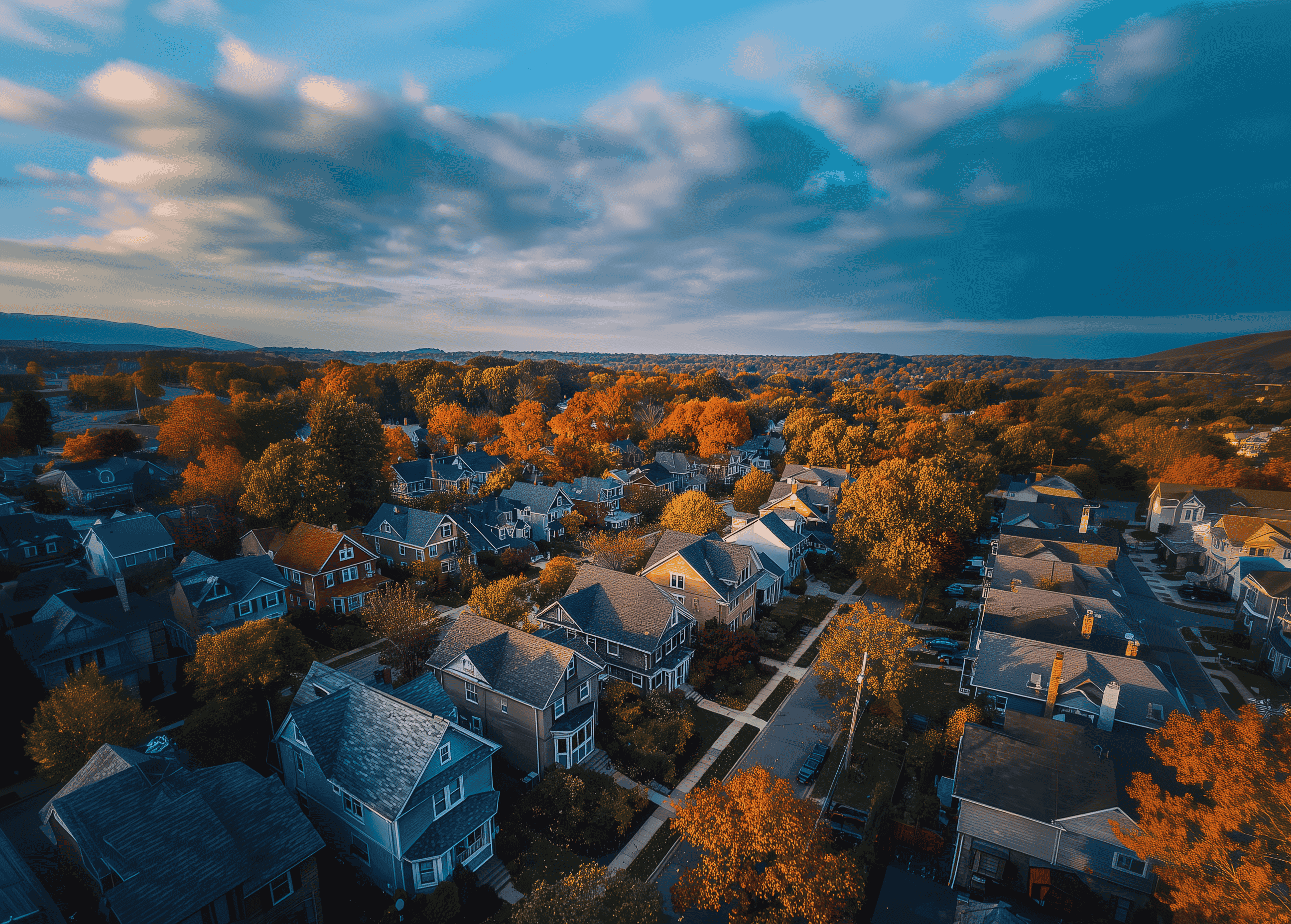


Definition · Roofing Marketing
It's the most precise idea in digital advertising — serve ads to one specific household, no cookies, no lookalikes. Whether it works comes down to a single number most vendors won't show you: how often the IP they bought actually belongs to the house you want.
See household-level ads in action
See the platform
No contract · No subscription · 500+ roofing contractors
THE SHORT ANSWER
IP-targeted advertising matches a physical street address to that household's IP address and serves display, streaming TV, video and native ads only to devices on that connection. Its effectiveness hinges on match accuracy: third-party IP data averages roughly 13% household accuracy (4–18% across six major providers, per a CIMM/Go Addressable/FreeWheel benchmark analyzed by Truthset, Nov 2025), while deterministic ISP-sourced matching — the method behind Reworked.ai's Home Ads — reaches as much as 95%.
~13%
avg. household accuracy, third-party IP data
4–18%
the range across six major providers
~95%
deterministic, ISP-sourced matching
0
cookies or lookalike audiences involved
The accuracy problem nobody advertises
The 2025 CIMM / Go Addressable / FreeWheel benchmark — roughly a billion IP records tested against ISP ground truth, analysis by Truthset — found third-party IP-to-household data averaged about 13% accuracy, ranging 4–18% across six major providers. Read that again: on average, nearly 9 of 10 “targeted” impressions can land on the wrong household while being billed as precision.
Deterministic matching skips the guessing — the address is resolved with the ISP that actually serves the home, which is how Home Ads validates ~95% accuracy on your list before a dollar is spent.
IP targeting vs the alternatives
1
vs. cookies — cookies follow browsers; IP targeting follows the household. No consent-popup decay, no cross-device gaps.
2
vs. lookalike audiences — lookalikes target people who may resemble buyers; IP targeting hits the exact homes you named.
3
vs. geofencing — a geofence is a shape on a map that catches whoever wanders through; an IP match is one address, one household.
How it works
1
Start from an address list — real street addresses, as well as homeowner names, you chose (for roofers: homes scored as needing work).
2
Resolve address → household IP — the critical step, done either by modeling third-party data or deterministically with the ISP.
3
Serve inside that household — ads run on the devices behind that connection: streaming TV, phones, laptops, tablets.
4
Cap and measure — frequency-capped per household, measured per campaign.
Frequently asked questions
KEEP READING